East or West of I-35: How Round Rock's Ground Moves Garage Doors
The same builder door behaves differently on either side of the interstate. The reason is under the slab, and it shows up first at the garage.
By Garage Door Care of Round Rock · · 7 minute read
Why the Interstate Is Also a Soil Line
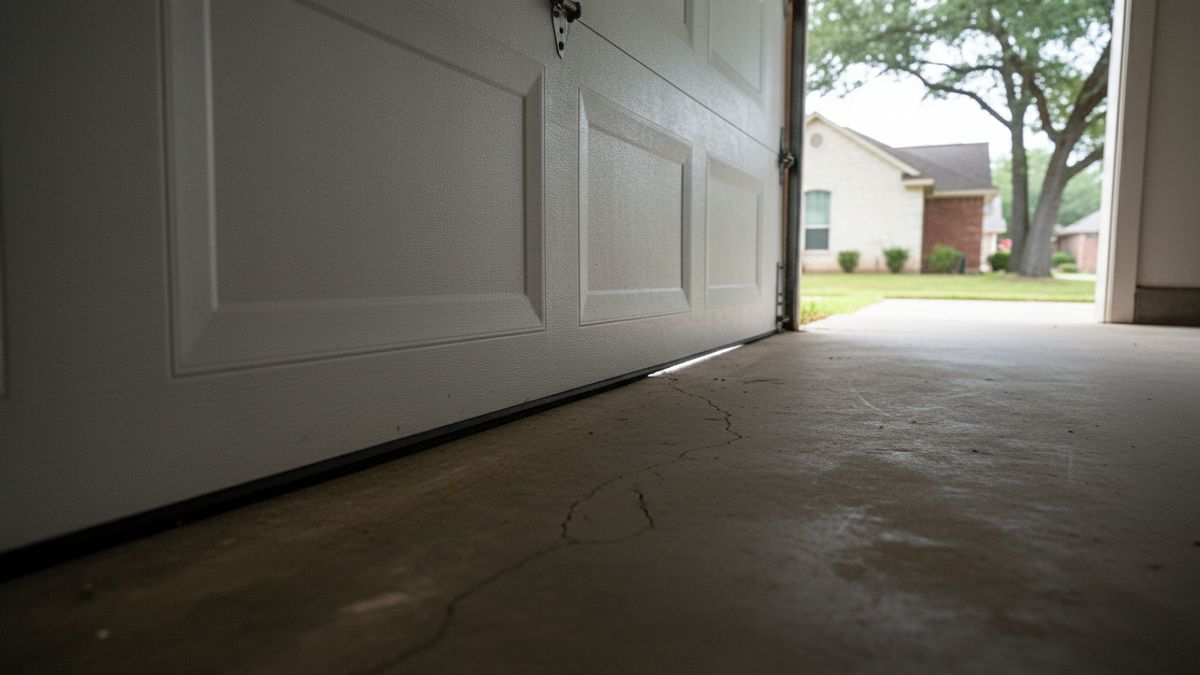
Round Rock sits across the Balcones Fault Zone, and I-35 roughly follows it through the city. West of the interstate, homes sit on thin soil over limestone that barely moves. East of it, much of the city sits on deep Blackland clay that swells when wet and shrinks when dry. That movement pushes a garage opening out of square, and a door that no longer fits its opening gaps at one corner, rubs a jamb and wears its cables unevenly. Resetting the door to the opening is track and alignment work, usually done in one visit.
The Handbook of Texas entry on the Balcones Escarpment describes the fault line as the boundary between the Edwards Plateau to the west and the coastal plains to the east. In a car it is a slight rise. Under a slab it is the difference between a house that stays where it was built and one that rides the seasons.
That is not a reason to worry about an east-side house. Most slabs here were built for clay and move within tolerances a structural engineer would shrug at. A garage door is simply less forgiving than drywall. It notices a quarter inch.
What Blackland Clay Does Between April and August
The dominant clay east of the interstate is the Houston Black series. Its official soil series description records high shrink-swell potential and dry-season cracks half an inch to four inches wide that run a foot or more deep. Anyone who has watched a Round Rock lawn in August has seen those cracks from the sidewalk.
The cycle runs with the rain. Spring storms soak the clay, it swells, and the slab edges lift. Then the long dry summer pulls the water back out, the clay contracts, and the corners settle. A garage slab with one side shaded by a live oak and the other in full sun can move unevenly in the same week, because the tree roots are drying one side faster.
The soil under your own lot is listed in the USDA Web Soil Survey. Type the address, draw a box around the house, and the report names the soil series and rates its shrink-swell potential. It takes five minutes and tells you which half of this article applies to you.
The Two Halves of the City, Compared
| West of I-35 (largely 78681) | East of I-35 (much of 78664 and 78665) | |
|---|---|---|
| Ground under the slab | Thin soil over limestone | Deep expansive clay |
| Seasonal movement | Small and slow | Noticeable between wet spring and dry summer |
| Typical door symptom | Wear from use and heat: springs, rollers, openers | Gap at one bottom corner, rubbing jamb, one cable slack |
| When it shows up | Steadily with age | Late summer and after the first heavy spring rains |
| Usual fix | Parts replaced as they wear | Tracks re-plumbed, cables leveled, bottom seal reset |
| Worth a foundation check? | Rarely | If gaps exceed about half an inch or return within months |
This is a pattern, not a rule for every lot. Cut and fill during construction, drainage and trees all change how a particular slab behaves.
Six Signs the Opening Has Moved
- Daylight under one bottom corner when the door is closed, with the other corner sealed tight
- The door rubs or squeaks against one side of the stop molding as it travels
- One lift cable sits slack while the other is taut
- The door closes, touches the floor on one side, and reverses
- A roller rides hard against the back of one vertical track
- The gap changes with the season, wider in late summer and closer after rain
Any one of these can also come from wear or impact. A bumped track or a roller that has lost its bearing makes some of the same noises. What points at the ground is the seasonal pattern, and the fact that the door itself is still straight when you sight along its bottom edge.
Setting the Door to the Opening It Has Now
The door gets fitted to the opening as it stands today, not as it was built. On the driveway that means five things, usually inside an hour:
Make it safe
10 minutesClamps on, spring tension checked, opener unplugged before any track bolt is loosened.
Plumb the tracks
15 minutesBoth vertical tracks set true with a level and spaced evenly from the door edge, so the rollers run free for their whole travel.
Level the door
10 minutesCable drums adjusted so both sides lift together. A door sitting level on uneven concrete is a door that is being held unevenly by its cables.
Seal the gap honestly
10 minutesA taller bulb seal closes a small wedge. A large one is a slab problem, and we will say so rather than hide it with rubber.
Reset and test
10 minutesOpener limits and force reset for the new geometry, then a reversal test at the floor.
What we will not do is shim under the low corner or turn up the opener's down-force to squash the door shut. Both work for a week and then bend a section or burn out a motor.
The Point Where It Is a Foundation Question
A garage door is an early warning, not a diagnosis. If the gap under the door comes back within a season of being adjusted, if interior doors start sticking, or if you see diagonal cracks running from the corners of windows and doors, it is worth having a foundation company or a structural engineer look before anyone spends money on the garage.
The standard Texas advice for clay still holds: keep the soil around the slab at an even moisture through the summer, with a soaker hose a foot or so out from the foundation rather than a sprinkler aimed at the wall. Gutters that dump at one corner and trees planted close to the slab are the two things that make one side move more than the other.
The door will tell you whether it worked. A door that stays square through August is a slab that is holding steady. For a door that gaps and rubs for reasons unrelated to the ground, our Round Rock garage door repair page covers the other usual suspects.
When in the Year to Have It Adjusted
Because the clay moves with the seasons, the timing of an adjustment matters more on the east side than the west. A door squared up in late April, when the ground is at its wettest, may gap again by August as the slab settles back. One set up in the depths of a dry summer can bind in spring.
Our advice is to fix what is causing trouble whenever it causes trouble, then watch it for a full year. If the door needs a small touch in late summer and another after the spring rains, that is the ground doing what Blackland clay does, and a technician can set the tracks and bottom seal to split the difference. If it needs more than that, the slab is moving more than it should, and that is the point to bring in someone who works on foundations.
West-side doors rarely follow a pattern like this. When a door on limestone starts to rub or gap, look first for a knocked track, a worn roller or a loose hinge, all of which are quick fixes.
More From Our Advice Pages
- Sealing the Gaps Around a Garage Door: Scorpions, Dust and Cedar PollenThe daylight test, the five places a door leaks, and the seal that fixes each one.
- Why Your Garage Door Opens by Itself, and How to Stop ItStuck remotes, shorted wall buttons, app schedules and failing boards, and how to tell them apart.
Soil and Door Questions
How do I know which side of the fault line my house is on?
I-35 is a close enough guide within the city, but the soil report is the real answer. The USDA Web Soil Survey names the soil series under any lot. Houston Black and similar clays mean the east-side pattern applies.
Is a gap under one corner of the garage door always a foundation problem?
No. Most of the gaps we see come from a door that has drifted out of adjustment or a slab that has moved a little within normal limits. A gap that returns quickly after adjustment, or that comes with cracks inside the house, is the one to take further.
Can a new bottom seal fix a gap by itself?
A small one, yes. A taller bulb seal will close a wedge of a quarter inch or so. Past about half an inch the seal is being asked to hide a geometry problem, and it will wear through or leave the door sitting crooked.
Why does my garage door fit fine in spring and badly in August?
That is the clay. Wet spring soil swells and lifts the slab edges, and the dry summer shrinks it back. The opening changes shape slightly with the season, and the door notices.
Do homes west of I-35 never get door alignment problems?
They do, but for different reasons: impact, worn rollers, loose track bolts and doors that were never set up quite right. The seasonal gap that comes and goes is much more an east-side pattern.
Daylight under one corner of the door? We can square it up.
Open 24 hours. Tracks plumbed, cables leveled and the seal reset in one visit.